Most road consignments in India travel at owner's risk, which means the goods owner bears the loss unless the transporter was negligent, and the transporter's liability is limited. The safest protection is goods-in-transit (marine cargo) insurance for the declared value, bought either for a single trip or as an annual open policy. For a smooth claim, note any damage on the proof of delivery, take photos and inform the insurer and transporter quickly.
- Owner's risk is the default on most LRs; the transporter's liability is limited.
- Transit insurance covers accidents, fire, theft and similar risks during the trip.
- Poor packing, normal wear and delays are usually not covered.
- Note damage on the POD at unloading, with photos, and report quickly.
Owner's risk vs carrier's risk
| Owner's risk | Carrier's risk | |
|---|---|---|
| Who bears loss | Goods owner, unless the carrier was negligent | Transporter, up to the agreed value |
| Cost | Standard freight | Higher freight to cover the extra risk |
| How common | Most road consignments | Less common; must be agreed in writing |
Even under carrier's risk, a transporter's liability is limited by law and by the LR terms unless a higher value is declared and agreed. That is why cargo insurance is the safest protection for valuable goods.
Types of transit insurance
- Single transit policy: covers one specific trip. Good for occasional, high-value loads.
- Open or annual policy: covers all your dispatches over a year, up to a limit per trip. Good for regular shippers.
Most manufacturers that dispatch regularly find an annual policy cheaper and simpler than buying cover for each trip.
What is usually covered, and what is not
| Usually covered | Usually not covered |
|---|---|
| Accident or overturning of the truck | Poor or unsuitable packing |
| Fire and explosion | Normal wear, leakage or shrinkage |
| Theft or non-delivery of the whole package | Delay in delivery |
| Damage during loading and unloading (if included) | Goods not declared correctly |
Policies differ, so read the wording or ask your insurance advisor before you dispatch.
How to make a smooth claim
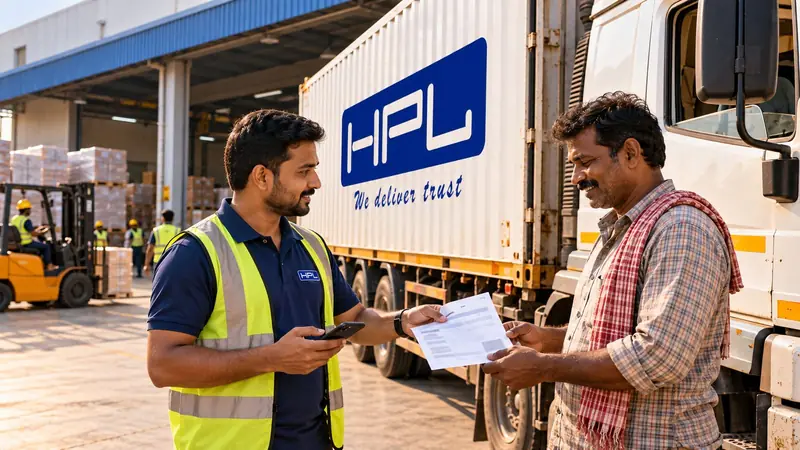
- Inspect the goods at unloading, before signing the proof of delivery.
- Write any damage or shortage clearly on the POD, and get the driver's signature.
- Take clear photos and videos of the damage and the packaging.
- Inform the insurer and the transporter in writing as soon as possible.
- Keep the invoice, LR, e-way bill, POD and photos ready for the surveyor.
Claims are often rejected because damage was not noted on the POD at the time of delivery. A few minutes of checking at unloading makes all the difference.
The best claim is the one you never make
Good packing, the right truck, a sound tarpaulin and a verified driver prevent most damage. Read our 5-point truck checklist.
Insurance with HP Logistics
We help you arrange cargo insurance based on the declared value of your goods, and our team supports you with documents if a claim is needed. See our LR terms and conditions for details on risk and claims.
Frequently asked questions
What does owner's risk mean in transport?
Is goods in transit insurance mandatory?
How soon should I report transit damage?