Choose FTL (full truck load) when your goods fill most of a truck, are urgent, fragile or high-value, because the truck goes straight from your gate to the delivery point. Choose PTL (part truck load) for smaller loads that are not urgent, because you share the truck and pay only for the space you use. A rough rule: if your load fills more than about half a truck, FTL usually works out better.
- FTL: one customer, one truck, direct trip, faster and safer.
- PTL: shared truck, lower cost for small loads, but more handling and stops.
- Fragile, high-value or urgent goods are usually better in FTL.
- If a load is more than about half a truck, compare an FTL quote too.
What FTL and PTL mean
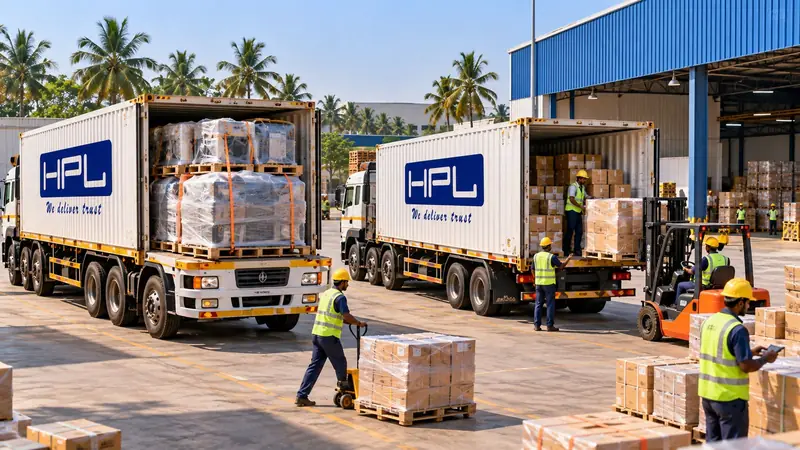
FTL (full truck load) means you book a whole truck. Only your goods are on it, and it goes directly from your pickup point to your delivery point.
PTL (part truck load), also called part load or LTL, means your goods share a truck with other customers' goods. The truck may stop at hubs to load and unload, and you pay only for the space or weight you use.
Side-by-side comparison
| FTL | PTL | |
|---|---|---|
| Cost | Fixed price for the whole truck | Pay by weight or space used |
| Speed | Faster, no stops for other loads | Slower, depends on hub schedules |
| Handling | Loaded once, unloaded once | May be handled several times at hubs |
| Risk of damage | Lower | Higher for fragile goods |
| Best for | Large, urgent, fragile or high-value loads | Small, sturdy, non-urgent loads |
A simple rule of thumb
If your load fills more than about half of the smallest suitable truck, ask for an FTL quote as well as a PTL quote. At that size, the price difference often becomes small, and FTL gives you a faster, safer direct trip.
For example, 6 tonnes of pump castings from Coimbatore to Hyderabad will often cost almost the same in a dedicated 19 ft truck as it would as a part load, but it will arrive sooner and with less handling.
When FTL is the better choice
- Machinery, motors and pumps that must not be dropped or stacked under other goods.
- Production deadlines where a delay stops a factory line.
- High-value goods, where fewer hands mean less risk.
- Goods that need a specific truck type, such as a closed container, flatbed or low-bed trailer.
When PTL makes sense
- A few pallets, cartons or bales going to a distributor.
- Regular small restocking loads where a day or two does not matter.
- Sturdy, well-packed goods that can handle extra loading and unloading.
How to save money either way
- Share accurate weight and size up front, so the right truck is sent the first time.
- Book a day or two ahead, especially at month end and during festivals.
- Ask about return-load routes. Trucks heading back to a hub are sometimes better priced.
- Combine small dispatches to the same region into one FTL when you can.
How HP Logistics helps you choose
Tell us the weight, size, route and deadline, and we will tell you honestly which option makes more sense, even if it is the cheaper one. Every truck we send, FTL or PTL, goes through our five vehicle checks and is tracked until delivery.
Frequently asked questions
What is the difference between FTL and PTL?
Is PTL always cheaper than FTL?
Which is safer for machinery?